
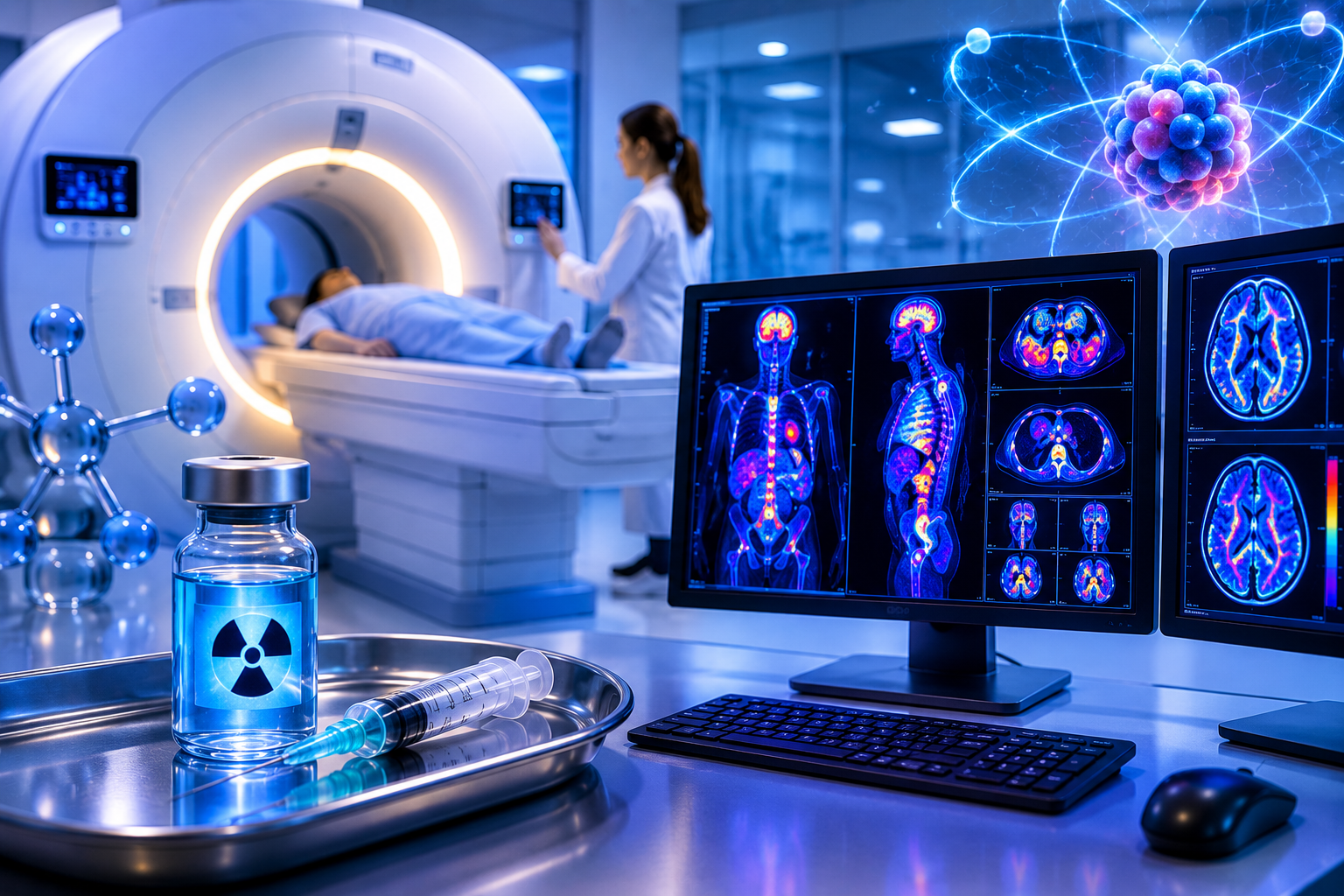
Why choose Medical Physics?
The programme uniquely combines knowledge from the natural sciences, engineering and medicine, creating a direct connection between research and clinical practice.
Why Choose This Programme?
If you have a background in engineering or the natural sciences and are interested in human-centred applications of physics, this programme is the right choice for you. Linear accelerators, cancer therapy, diagnostic imaging, bunkers, spins, and isotopes – all are part of the field.
The programme prepares you equally for careers in research and development, academia, or clinical practice. Upon completion, you will be familiar with the theoretical, experimental, and computational methods of medical physics (including radiation therapy, nuclear medicine, and diagnostic imaging), as well as relevant areas of mathematics and informatics.
You will be capable of developing and operating high-quality industrial, clinical, IT, and measurement systems based on physical principles and cutting-edge technologies.
Research and Development
The programme prepares students for future research and development, including the development of advanced medical technology systems.
Clinical Practice
The knowledge and skills acquired can be directly applied in the clinical practice of medical physics.
State-of-the-Art Technology
MRI, CT, PET, SPECT, radiation therapy, artificial intelligence, and advanced information technology systems.
☢️ Radiation Therapy Treatment Devices
Would like to work with radiation therapy treatment devices and
- gain a precise understanding of their operation and their effects on the human body;
- learn their proper use, as well as the rules and protocols of radiotherapy treatment planning, and practice them at the National Institute of Oncology;
- be able to perform their calibration and carry out measurement-based and experimental quality assurance;
- understand their physical principles in depth, enabling you to contribute to the development of the equipment, its software environment, and usage methods;
- wish to conduct scientific research in this field;
🧲 Magnetic Resonance Imaging (MRI) Systems
Would like to work with magnetic resonance imaging (MRI) systems and:
- understand their operating principles at a level that enables you to assemble a working MRI system in our laboratory;
- learn and apply different measurement techniques (pulse sequences) and understand their differences;
- participate in development, create new sequences, and evaluate the quality of the results;
- conduct scientific research in this field;
🔬 Computed Tomography (CT) Systems
Would like to work with CT (computed tomography) systems and
- understand their physics, including X-ray generation, interaction with the human body, and detection, and gain in-depth knowledge of the mathematics of 3D image reconstruction—enough to assemble a CT system in our laboratory;
- correctly set acquisition parameters, perform scans, verify system resolution and spectra through measurements, and calculate radiation transport in full detail;
- participate in development and design systems optimized for specific applications;
- develop advanced, modern image reconstruction software (even GPU-based) to generate 3D images from measured data;
- conduct scientific research in this field;
⚛️ Positron Emission Tomography (PET) Systems and Single-Photon Emission Computed Tomography (SPECT) Systems
Would like to work with positron emission tomography (PET) and single-photon emission computed tomography (SPECT) / gamma cameras and
- understand their physics, including gamma isotope sources, interactions of gamma radiation with the human body, and energy- and position-sensitive detection, enabling you to perform measurements using the institute’s gamma camera and PET modules;
- process signals, model radiation transport in detail, and develop advanced (even GPU-based) reconstruction software to create 3D images from measured data;
- acquire and analyze images;
- conduct scientific research in this field;
🔊 Ultrasound (US) Systems
Would like to work with ultrasound (US) systems and
- understand their physical principles in depth, to the extent that you can assemble an ultrasound system in our laboratory;
- improve the quality of ultrasound images;
🛡️ Radiation Protection and Dosimetry
Are interested in radiation protection and dosimetry and wish to
- thoroughly understand the mechanisms of interaction between ionizing radiation and living organisms (radiobiology);
- learn the regulations that ensure harmful effects remain within safe limits;
- understand methods for measuring radiation exposure (dosimetry);
- conduct scientific research in these areas.